A $23,420 Fee to Build a Retirement Home, With No Way to Fight It
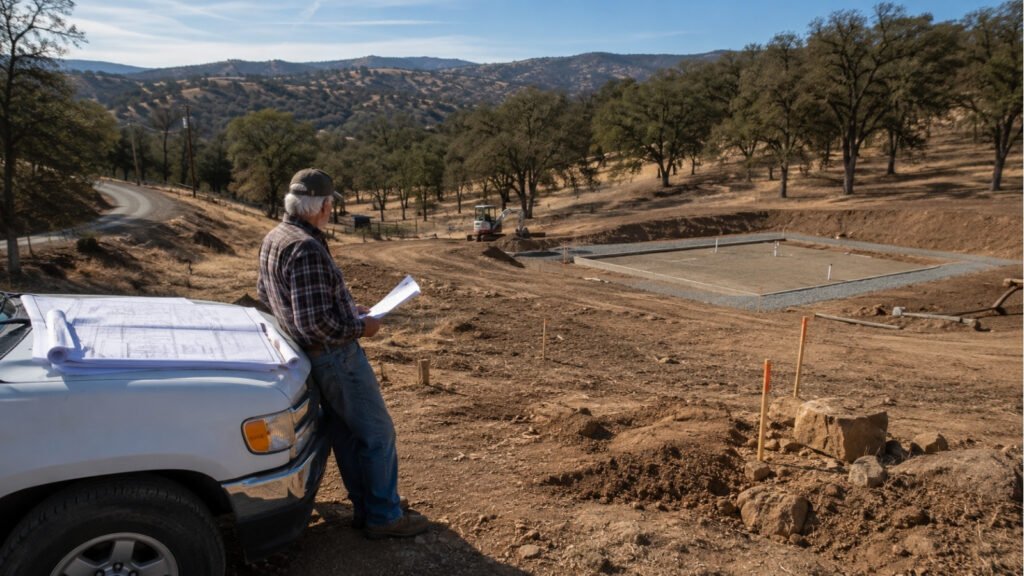
In 2016, an engineering contractor named George Sheetz bought a modest parcel of rural land in El Dorado County. He was planning for retirement. The idea was simple: place a small manufactured home on the lot, somewhere quiet for him, his wife, and their grandson.
He applied for a building permit. The county said yes, but only if he first paid a traffic impact fee of $23,420. The fee wasn’t based on any analysis of how much traffic his modest home would actually generate. It was drawn from a rate schedule that applied the same amount to every project of that type in that area, regardless of its real-world impact. No individualized review. No explanation of the connection between his specific project and the dollar figure demanded.
Sheetz paid under protest. When the county refused to engage with his objection, he sued.
He was told, in effect, that there was nothing to argue. The fee was set by the board of supervisors through a legislatively enacted general plan. Courts at the time held that fees created through legislation, rather than imposed by individual planning officials, sat beyond the reach of constitutional challenge.
For years, that was the law in California. That changed on April 12, 2024, when the U.S. Supreme Court issued its unanimous ruling in Sheetz v. County of El Dorado. If you’re a property owner, a developer, or a landowner facing permit conditions in California, this decision opened a constitutional door that didn’t exist before.
What the Supreme Court Actually Decided in Sheetz
Sheetz v. County of El Dorado (2024) established that the Takings Clause of the Fifth Amendment applies to development impact fees imposed through legislation, not just those imposed by individual government officials. The constitutional protection property owners had against arbitrary permit conditions now extends to fees set by ordinance or statute.
The lower courts had dismissed Sheetz’s claim under a rule that had been specifically endorsed by the California Supreme Court: the Nollan/Dolan constitutional test applied only to fees imposed on an individual, case-by-case basis by administrative officials. Fees imposed on a broad class of property owners through legislative action were treated as categorically exempt from that scrutiny.
The U.S. Supreme Court disagreed, unanimously. As confirmed in the Court’s published opinion, Justice Amy Coney Barrett held that nothing in the Constitution distinguishes between fees imposed by a legislature and fees imposed by an administrator. The Takings Clause doesn’t have a carve-out for legislative action. The government can’t sidestep constitutional scrutiny simply by embedding an impact fee in a city ordinance rather than having a planning official impose it case by case.
That’s a significant shift. Before Sheetz, local governments across California had a reliable method of insulating impact fees from challenge: pass a fee schedule through the legislative process and point to the ordinance whenever a property owner objected. That protection is gone. Any development impact fee, regardless of how it was adopted, now has to hold up under the constitutional standard that the Court has long applied to permit conditions: the Nollan/Dolan test.
Understanding the Nollan/Dolan Test: The Constitutional Standard That Now Applies
The Nollan/Dolan test is the constitutional framework courts use to evaluate whether a condition placed on a building permit is a lawful government requirement or an unconstitutional taking of private property. It comes from two landmark Supreme Court cases, and it has two distinct prongs. Both must be satisfied.
Essential nexus comes from Nollan v. California Coastal Commission (1987). It requires that the government’s fee or condition have a genuine, logical connection to the impact your specific project is expected to cause. A traffic impact fee must actually relate to the traffic your project will generate. If the connection between the fee and your project’s real-world impact is tenuous or absent, the fee fails the first test.
Rough proportionality comes from Dolan v. City of Tigard (1994). Even where a genuine connection exists, the amount of the fee must bear a reasonable relationship to the scale of the burden your specific project creates. A flat fee charged to every new residential permit in a county, regardless of the home’s size, location, proximity to existing infrastructure, or actual projected traffic, is exactly the kind of blunt instrument this prong is designed to catch. The government must show that what it’s demanding from you is proportionate to what you’re imposing on the public.
Here’s the practical summary:
- The fee must be genuinely connected to the impact your project will cause, not just to development generally
- The fee amount must be proportionate to your project’s actual, measurable burden, not averaged across all development
- A blanket schedule that applies the same dollar amount to every permit in a category, without individualized analysis, is vulnerable to challenge on both grounds
One detail that surprises most property owners: the burden of proof falls on the government, not on you. It’s the county or city that must demonstrate the fee satisfies both prongs. You don’t have to prove the fee is wrong. They have to prove it’s right.
Before Sheetz, these tests applied only to fees imposed by individual administrative officials. California property owners challenging legislatively set fees couldn’t get a court to even apply them. Now they can.
California's First Post-Sheetz Ruling: What the Remand Decision Actually Tells Us
The Supreme Court in Sheetz didn’t resolve whether El Dorado County’s specific fee passed the Nollan/Dolan test. That wasn’t the question before it. The issue was whether the test applied at all to legislative fees. Having confirmed that it does, the Court sent the case back to the California courts to apply the standard.
On July 29, 2025, the California Court of Appeal issued its ruling on remand. The county’s fee was upheld. But the how and why of that outcome matter enormously for any property owner considering a challenge, and they tell a more useful story than the headline result.
El Dorado County won because it had done its homework. As detailed in the Court of Appeal’s remand decision, the court found that the county had produced a detailed administrative record: expert traffic studies, cost forecasts, and zone-specific modelling that justified the fee amount as proportionate to the projected impact of new development. Sheetz couldn’t point to record evidence that rebutted that analysis. The court confirmed that the government carries the burden of demonstrating rough proportionality, and when an agency meets that burden with credible, well-documented data, the fee can survive scrutiny.
What this tells property owners is straightforward. A fee program backed by thorough, project-linked analysis is defensible. A fee program that relies on outdated studies, generic assumptions, or no individualized analysis at all remains exactly the kind of target the Nollan/Dolan test was designed to catch. The constitutional door is open. Whether a specific fee falls through it depends on what the government can actually show about the connection between that fee and your project’s real impact.
California courts are now actively applying this framework to legislatively imposed fee schedules. That’s a substantive change in what property owners can ask a court to consider, and the remand decision clarifies what kind of evidence actually moves the needle.
What This Means If You're Facing a Development Impact Fee in California
Sheetz doesn’t make every impact fee automatically unconstitutional. The Nollan/Dolan test has real standards, and meeting them requires evidence. But what the ruling restored is something fundamental: the right to be heard. The right to ask a court to look at whether the fee charged to you bears any genuine relationship to what your project actually imposes on the public.
You may have grounds to challenge a development impact fee if any of the following apply:
- The fee is drawn from a flat-rate schedule applied uniformly to all permits in a category, with no individualized analysis of your project’s actual impact
- The fee is tied to infrastructure costs that the government’s own records don’t link specifically to your project type or location
- The infrastructure category the fee covers, whether traffic, schools, or parks, is one your project demonstrably doesn’t meaningfully affect
- The nexus study or proportionality analysis supporting the fee is outdated, relies on generic assumptions, or was never made available as part of the public record
Evidence is everything here. A constitutional challenge to an impact fee isn’t an informal complaint. It requires documentation: your project’s actual projected impact, the government’s own nexus studies if they exist, the fee schedule and the ordinance adopting it, and expert analysis demonstrating where the fee fails the proportionality requirement. The remand outcome confirmed that when government documentation is solid, it’s hard to overcome. When it isn’t, the challenge becomes viable.
This is also the area where broader land use disputes in California come into play. Permit conditions, development approvals, and impact fees often exist alongside zoning challenges, CEQA delays, and growth control measures that compound the financial burden on private property owners. Each layer may have its own legal implications.
What Evidence Do You Need to Challenge a Development Fee as an Unconstitutional Taking?
A successful challenge under Sheetz and the Nollan/Dolan framework isn’t built on argument alone. It’s built on a record. Here’s what typically matters:
- An individualized impact analysis. Evidence of what traffic, environmental, or infrastructure impact your specific project will generate, not what the fee schedule assumes for your permit category. This often requires an independent expert.
- The fee schedule and its supporting documentation. The ordinance or resolution that established the fee, along with any nexus study the government relied on when adopting the schedule. If that study is thin, outdated, or disconnected from your project type, that weakness matters.
- A proportionality comparison. A credible, documented analysis showing the fee demanded exceeds the cost attributable to your project’s actual impact on public infrastructure.
- Your permitting record. Correspondence with the planning or building department, the conditions of approval, and any written objections you raised during the process. Preserving the administrative record matters, and challenges are significantly stronger when objections are documented early.
The July 2025 remand ruling illustrated exactly this dynamic. The county prevailed because it had detailed technical studies on file and Sheetz lacked record evidence to rebut them. Where that documentation is absent or inadequate on the government’s side, the constitutional challenge remains real and viable.
One important practical point: timing matters. If you pay the fee without objection, or accept the permit conditions without protest, you may complicate or forfeit your ability to challenge later. The time to consult an attorney experienced in Fifth Amendment takings claims in California is before the fee is paid, not after.
A New Constitutional Window That Wasn't There Before 2024
Property rights in California have been under sustained pressure for decades. Local governments, armed with broad regulatory authority, lengthy fee schedules, and the procedural protection of the legislative process, have had wide latitude to impose financial conditions on development with limited accountability. Sheetz doesn’t reverse that balance entirely, but it does restore a meaningful check.
The Supreme Court’s ruling was unanimous. That’s not a narrow or contested constitutional development. It was a clear statement that the Takings Clause protects property owners from unconstitutional permit conditions regardless of how those conditions were imposed. A legislature doesn’t get to bypass the Constitution by passing an ordinance. If the fee doesn’t satisfy essential nexus and rough proportionality, it’s vulnerable whether a planning official imposed it or the board of supervisors did.
For California property owners and developers, the question you should now be asking isn’t just “can I afford this fee?” It’s “is this fee constitutional?” That’s a question courts are now required to answer, and it’s a question that has real teeth for the first time since impact fee schedules became a standard fixture of California development.
Kassouni Law has spent more than three decades litigating Constitutional property rights cases in California, exclusively on behalf of private individuals and businesses, never on behalf of government agencies. Landmark results like Lockaway Storage v. County of Alameda, where the California Court of Appeal held Alameda County liable for over $2.7 million after an unconstitutional denial of building permits, reflect what it means to treat property rights as a genuine constitutional matter rather than an administrative inconvenience.
The Sheetz decision is exactly the kind of constitutional opening that the firm’s Constitutional property rights practice was built to pursue.
Frequently Asked Questions
What is a development impact fee and why do California cities and counties charge them?
A development impact fee is a charge imposed on new construction as a condition of receiving a building permit. Local governments use these fees to offset the infrastructure costs, including roads, schools, parks, and utilities, that new development is expected to create. The underlying theory is that growth should fund the public costs it generates rather than placing that burden on existing residents and taxpayers.
How did the Sheetz decision change property owners' rights to challenge these fees?
Before Sheetz v. County of El Dorado (2024), the California Supreme Court had held that the constitutional Nollan/Dolan test applied only to fees imposed on individual projects by administrative officials, not to fees set through legislation. The U.S. Supreme Court unanimously rejected that distinction. Now, any development impact fee, whether set by ordinance or imposed by a planning official, must satisfy the essential nexus and rough proportionality test to withstand a constitutional challenge.
What is the Nollan/Dolan test and how does it apply to my permit fee?
The Nollan/Dolan test requires that any condition placed on a permit, including a monetary fee, satisfy two standards. First, the fee must have a genuine connection to the specific impact your project is expected to cause (essential nexus). Second, the amount must be reasonably proportionate to the scale of the burden your project actually imposes (rough proportionality). A uniform fee schedule that applies the same amount to every permit in a category, with no analysis of your project’s individual impact, may fail one or both prongs. Importantly, the government bears the burden of proving both standards are met.
Can I challenge an impact fee even if it was set by a city ordinance rather than a planning official?
Yes, and that’s exactly what Sheetz confirmed. The Constitution doesn’t give the government a pass because a legislature set the fee rather than an individual administrator. The Takings Clause applies regardless of which branch of local government imposed the condition. If the fee doesn’t satisfy essential nexus and rough proportionality, it’s open to challenge whether it came from an ordinance, a resolution, or a single planning decision.
What evidence do I need to prove a development fee is an unconstitutional taking in California?
You’ll need to demonstrate either that the fee lacks a genuine nexus to your project’s actual impact, or that the amount is disproportionate to the burden your project creates. That typically means an independent impact analysis, the fee schedule and the government’s supporting nexus studies, expert comparison of the fee against your project’s measurable impact, and a preserved record of your permit process including any objections raised during the permitting stage. The July 2025 remand ruling showed that when the government has thorough documentation, it’s difficult to overcome. When that documentation is thin, generic, or absent, the challenge becomes significantly stronger. Raising objections early and getting them on the record is one of the most important steps a property owner can take.
This article is for informational purposes only and does not constitute legal advice. No attorney-client relationship is created by reading this content. Contact Kassouni Law for a consultation regarding your specific situation. Past results do not guarantee similar outcomes.
If you’ve received a development impact fee that seems disconnected from your project’s actual impact, or one where the government’s documentation simply doesn’t add up, don’t wait until after it’s paid to ask questions. Speak with a property rights attorney who can assess your specific situation and give you an honest evaluation of whether a challenge is worth pursuing.